How the next-due date is set
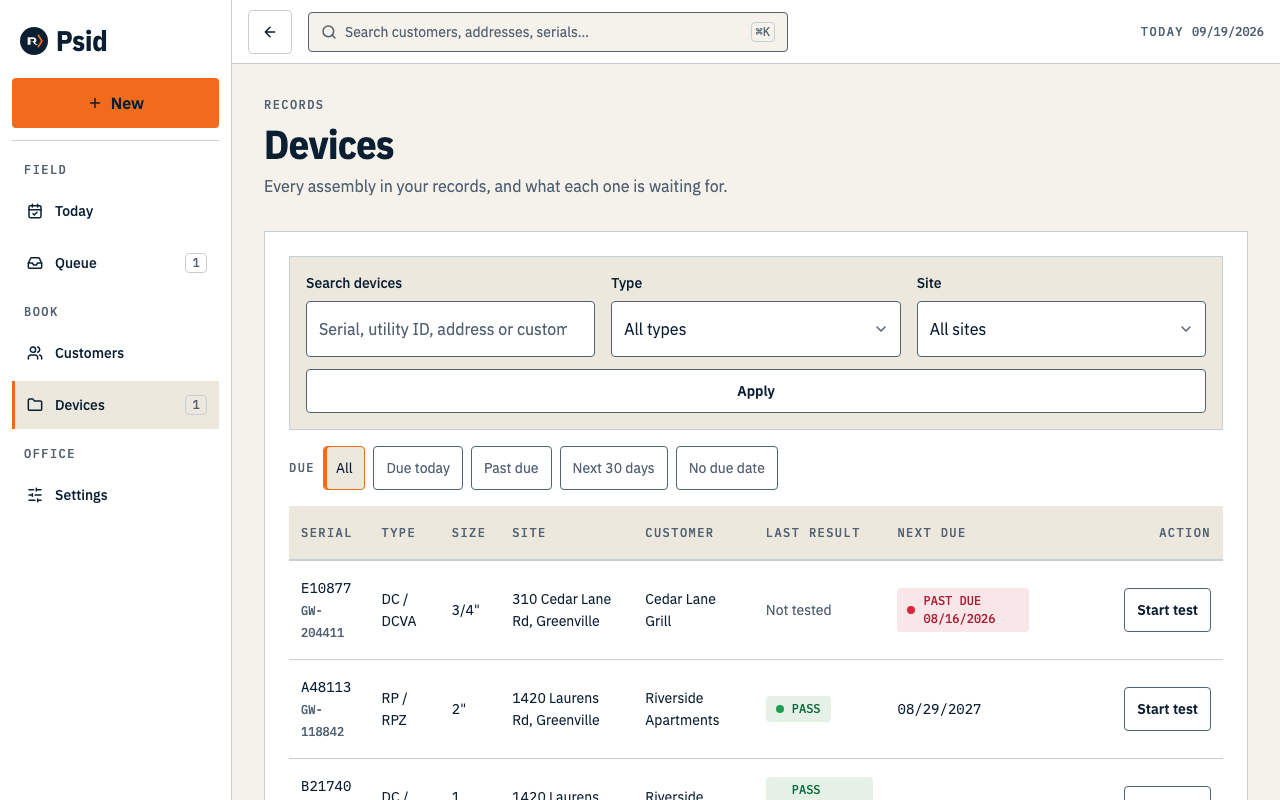
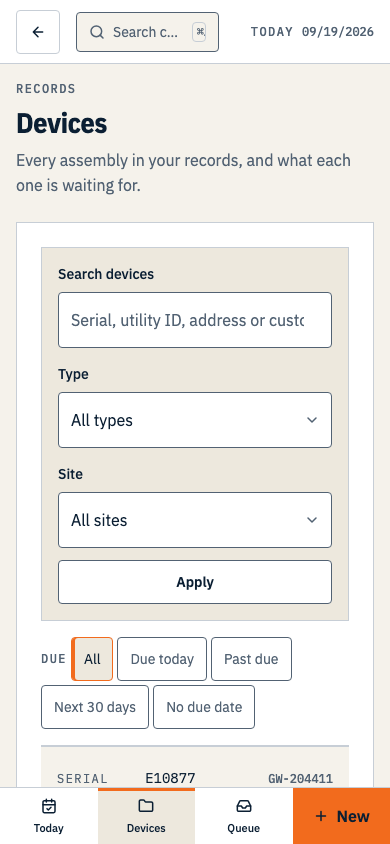
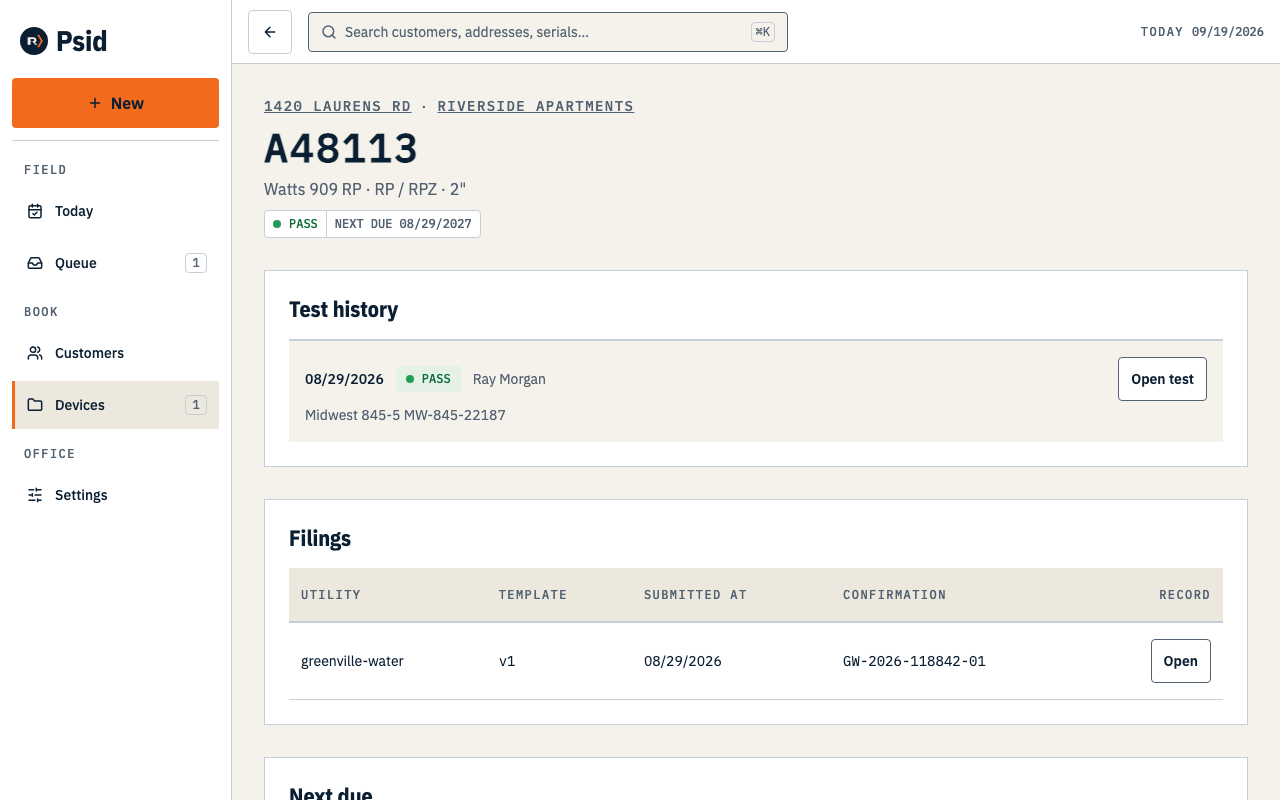
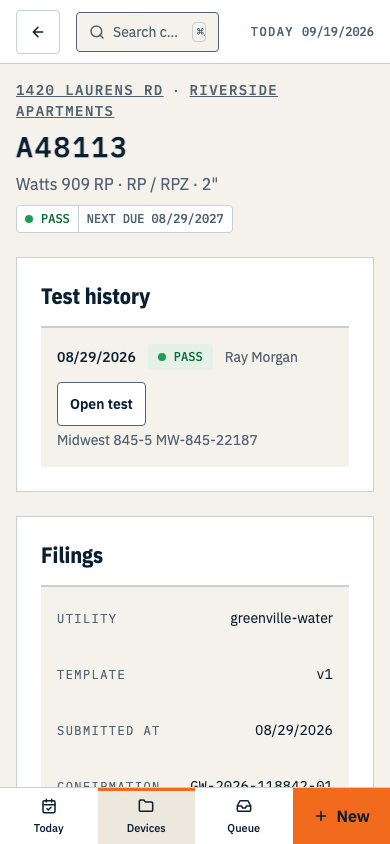
Psid advances a device’s next-due date only when a test passes, and it measures from the test date, never from the day you filed.
The rule
- Pass
- Next due is the test date plus the device’s test interval, which is twelve months unless you changed it on the device.
- Pass after repair
- Treated as a pass. The assembly ended the visit working, and the repair is kept as its own record so the history shows what happened.
- Fail
- Nothing is advanced. The device keeps the date it already had, which is usually already past — a failed assembly is not compliant for another year because someone looked at it.
- Not tested
- Nothing is advanced. A visit happened and no readings were taken; that is recorded, and the due date is untouched.
Things it deliberately does not do
- It does not advance on completion of a failed test, on a filing, or on a confirmation number.
- It does not add a grace period. A device past due is past due on the day after its date.
- It does not shift a date because a certification was renewed later — validity is always judged against the test’s own date.
- It does not remind anyone. Psid records the date; contacting the customer is yours.
The due date is written in the same operation that completes the test, so a device can never carry a date that disagrees with its own last test.
Changing the interval
The interval lives on the device, so a site with an annual assembly and a semi-annual one keeps both right. Changing it does not move an existing next-due date; the new interval is used the next time a test passes.